Showing posts with label Schools. Show all posts

Saturday, 15 June 2019

#52Ancestors - Week 35 - Back to School

Each afternoon after school I listen to my seven year old grandson read his new reader. He is in grade one and effortlessly reading books set for grade three and four children.The books are a mixture of story books and non-fiction. Yesterday he read to me a book about different forms of energy while the previous day the book was about mammals. Other recent story books have been about a newspaper for cats, a couple of Hey Jack! books by Sally Rippen plus some science fiction.

This experience caused me to think about the type of reading that we did at primary school in the 1950s.

In those days I was not able to start school until I was almost six which meant that I had to wait for the mid-year intake as my birthday was in July and the cut off date for starting at the beginning of the year was 30 June. I had been attending kindergarten since I was three and all I wanted to do was go to school and learn to read.

Our first reader was John and Betty which many of us remember with affection. However I quickly learned to read 'This is John'. 'This is Betty'. etc and I am not aware of any additional reading material, except, perhaps flash cards during my first months at school. John and Betty was first published in 1951.

In  Grade 1 our reader was Playmates. This was the only reader that we had for the year. Like John and Betty it was illustrated by Marjorie Howden but it was a more substantial book being 72 pages. The subtitle was the Victorian Readers First Book and it was first published in 1952.

By Grade 2 we had graduated to the school reader entitled Holidays: the Victorian Readers Second Book.  This reader was again illustrated by Marjorie Howden and was 104 pages. As to be expected there is more writing on the pages. Holidays was first published in 1953.
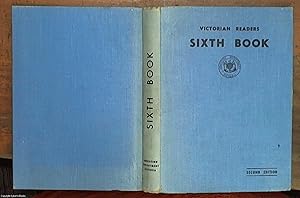
The Victorian Readers Sixth Book
From Grade 3 to Grade 6 we had a reader designated for each year level - eg Victorian Readers: Third Book originally published in 1940 containing an anthology of poetry, prose, children's fiction and drama. Especially in the older years these readers provided an introduction to Australian short stories such as The Drover's Wife by Henry Lawson. I also remember the poem - You are Old Father William by Lewis Carroll and I Wandered Lonely as a Cloud by William Wordsworth.
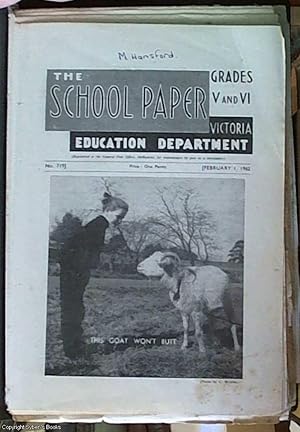
The School Paper Grades V and VI 1962 nos 719, 720, 721, 722,723, 724, 725, 726, 727, 728, 729 including index
Example of a School Paper
We also had a folder in which to keep the monthly copy of the School Paper which was published for grades 3 and 4 and also for grades 5 and 6. These publications contained additional short stories, poetry and short information articles to read.
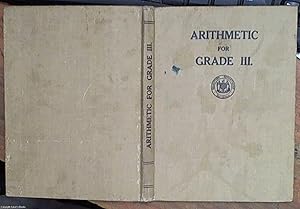
Arithmetic for Grade III
The other books that we had each year from grades 3 to 6 was the Arithmetic Book.

There was no public library in our area in the 1950s and definitely no school library. Fortunately friends and family knew that I enjoyed reading so I usually received books for my birthday and Christmas. When I was in Grade 5, I was in a Grade 5 / 6 composite class where our teacher encouraged us all to bring a book to school to create a classroom library. This was a great way to read books that other students liked and we took our books home at the end of the year.

Researching Australian Education - School readers

John and Betty - Book Browser - (contains photographs of pages from the reader)

Playmates - Deakin University - a pdf of the reader

Holidays - Deakin University - a pdf of the reader can be downloaded

Readers and textbooks - State Library of Victoria.

Saturday, 13 January 2018

Kambala

Kambala school for girls began at Fernbank, a house in Edgecliff Road Edgecliffe. In 1887 Miss Louisa Jane Guerney started a school with 12 girls in the house. As the number of pupils increased the school moved to a larger property named Kambala in 1891.The new property consisted of 13 acres. By this time Mademoiselle Augustine Soubeiran was co-principal with Miss Guerney.

In 1913 the school had grown to almost 50 pupils so it once again relocated, this time to Tivoli, its present home in Rose Bay. The school brought the name, Kambala, to the new location. A building has been on this site since 1842 when Captain William Dumaresq built a cottage and later a house. The Dumaresq family lived on the site until 1881 when Morrice Alexander Black purchased the property. He then had the house rebuilt. Further estensions and alterations have been made to Tivoli since it became a school. It is currently the boarding house for year 7 - 10 students.
Tivoli (1941)
Additional buildings have been built on the site as well as sports grounds.
Senior House building (1941)
In 1926 Kambala became a Church of England (Anglican) Foundation School.

My mother, Rosemary Lord, was a pupil at Kambala from 1939-1942. Consequently she was at the school during part of the Second World War. The post in this blog, Shelling of Rose Bay, provides information about Rosemary's memories of her school days at Kambala during the war.

Rosemary started the school in first form (year 7 now). Rosemary's life at school during this time can be viewed via some of the photographs in a family album.
Group of friends outside the Tivoli building (1939)
Miss Fifi Hawthorne was headmistress of the school when Rosemary attended Kambala. Miss Chadwick was the House Mistress during Rosemary's first year at the school.
Miss Chadwick (1939)
In a family history interview in 1994 Rosemary described one of her interests at school:

I used to take part in the drama class at school. The first year I got the runners up prize and the second year I won the prize for playing a hunter in some crazy thing. We used to spend lunch time sometimes fooling around in plays and things. One girl was really funny. She had invented a skit on The Three Bears. There was much giggling and what have you. She later became a doctor.
Friends (Rosemary second from left in group)
Relaxing in the school grounds
Shirley, Judy, Helen, Myra, Jill, Rosemary, Jocelyn, Ruth (1941)
Rosemary's favourite sport at school was tennis. In the 1994 interview she described her interest in sport: "I played tennis and I was captain of the B team. I played basketball (netball) but I played in the B team."
Ready for a game of tennis.
Kambala is in a beautiful location as the image below, from Wikipedia, indicates.
Click on the image for a better view
As Rosemary noted: "The school was in a beautiful position overlooking the harbour by the flying boat base. For a couple of years I was in classrooms that overlooked the base and it was hard to concentrate."

Although Australia was at war it did not directly impact upon Sydney until 1942. However the girls would have had family members - brothers, cousins - who had enlisted and in some cases were serving overseas. Rosemary's cousin, David, enlisted in July 1940 and was sent to Malaya. Her brother, Michael, enlisted in December 1941. There must have been discussion among the students regarding events overseas.

When the girls returned to school in 1942 air raid shelters had been constructed during the holidays and air raid practice implemented. Then in June 1942 a Japanese submarine shelled sections of Rose Bay, not far from the school.

Rosemary observed: "The air raid came in the middle of the night. We didn’t realise at the time how serious it was. Part of Rose Bay was shelled including the beach. At New South Head Road some flats were hit, not badly but windows were broken."

Rosemary also noticed one change in the neighbourhood after the shelling in 1942:  "Across the road from us there was a house which was let to the Americans who used to come there on R & R leave. Of course I was young and innocent and did not take notice particularly but I presume they had their girlfriends there."

The shelling of Rose Bay would have alerted the students at Kambala, especially the senior students to the seriousness of war. A number of them, including Rosemary and her friend Jill, volunteered to do community work with war related organisations. (More about that in a future post).  However, in the meantime the students completed their studies before embarking on the next stage of their life.


Further information and references:

Shelling of Rose Bay - Family Connections

For the love of old buildings - a post in the blog Lilyfield Life

Kambala School - Wikipedia

Kambala Girls' School - Local History Fast Facts - Woollahra City Council (useful information about other sites in Woollahra)

History - Kambala - School website

Saturday, 27 August 2016

A Patchwork of Memories

Week Four in the National Family History Month Blogging Challenge looks at the idea of country or place in family history including what makes a place special or unique.
Check more contributions here
One of the assignments in the University of Tasmania Family History unit, Place, Image Object, was to create an annotated map of an area important to your family history. This was to be a creative activity where participants chose materials to create their map. A short reflective statement was to accompany the annonated map / artwork created. This proved to be a challenging assignment as the examples provided appeared to relate more to artwork rather than history but I took a deep breath and did the best that I could.

Although the presentation of the material was a challenge the exercise, from a history viewpoint, was worthwhile. I was seven and in grade 2 when we arrived at our new home in Edinburgh Street, so I based my assignment as an observation of the area as seen largely through the eyes of a child. As I thought about my chosen site I recalled many memories of my childhood and the process caused me to think about how the area had developed from market garden to suburbia. I named the assignment A Patchwork of Memories.
Patchwork of Memories
I chose to look at the a section of the suburb of East Bentleigh which my family moved to in May 1955, an area which several years earlier had been market gardens. This area, locally, also has the name of Coatesville after the name of the primary school established in August 1953. The school was originally South Oakleigh State School but was renamed Coatesville in 1955 after Councillor Leslie Robert Coates. The post office, lawn bowls club and tennis club also use the name Coatesville.

When doing research for this assignment I discovered, on the State Library website, a Collins Street Directory 1952 map of the area showing a blank space for the area where we were to live, go to school, attend church and shop.
Map of part of East Bentleigh 1952 - Collins Street Directory
I created a very basic map for the assignment showing the initial changes made to the area by 1955.

The area on both sides of Mackie Road had now begun to be developed with the addition of streets, a shopping centre, school and church.
Google Maps shows the area today as suburbia
My family moved from rental accommodation in an established area to a brand new house, purchased via a war service loan, built on a developing housing estate. As already mentioned, the area had originally been market gardens. An article in The Australasian in 1906 describes the market gardens in Moorabbin with crops grown  including potatoes, cabbages, carrots, turnips and cauliflowers. Artichokes were grown in the Coatesville area as at one stage as my parents and neighbours found artichokes in the garden for many years. When we moved to Edinburgh Street there were hardly any completed buildings in the street apart from our house, the house on the Mackie Road corner belonging to the family who had owned the local market gardens and a house on the Tambet Street corner.

Other houses were being built nearby and gradually the area changed from green furrowed paddocks with a few houses to streets of houses, made roads and lots of people, including children. The paddocks were places to explore, make cubby houses and daisy chains. The sound of building was prominent during the day but once the builders left, the new structures became play areas for children. We spent hours clambering over these wooden structures forming the intial frame of what were to become rows of brick veneer houses.

For a child the nearby school was an important place. Being only two streets from home it was a short walk to school and in my senior years at primary school I often went home for lunch. Initially Coatesville was the only state school in a rapidly expanding residential area and consequently the class sizes were large until new schools opened at South Oakleigh and Valkstone. When Valkstone State School opened two grade four classes from Coatesville were each day bussed to the new school for their lessons. My memories of primary school include learning to play skippy, hopscotch, swapcards, shelter sheds where we often played but also watched movie films with blackout curtains over the doors, lessons via radio piped into the classroom, school milk each day, ink wells, ink monitors and boys flicking ink soaked blotting paper across the room, rows of desks, blackboard monitors, marching into school to the beat of a drum after assembly, school marching team, inter school sports at Oakleigh, swimming lessons at Brighton baths, learning maypole dancing and the school fete each year. There was also a vacant paddock next to the school (it later became part of the school grounds) where we were not allowed to play but, of course, we did.

The church was where we went to Sunday School - hundreds of children attended each Sunday - attended the Girls Friendly Society (GFS) each week, played in our GFS basketball team, went on the annual Sunday School Picnic (often in a furniture van to places such as Ferntree Gully) and, of course, the Church fetes.

The shopping centre was also two streets away in the opposite direction to the school so I was allowed to go to the shops for Mum to purchase her copy of the Women's Weekly from the newsagent or to buy a bag of broken Nice biscuits from the Grocers. At the Milk Bar we were occasionally allowed to buy an icy pole or a small bag of mixed lollies which we chose from the display cabinet.

Being a new area creating a garden was an important activity and we watched the transformation of the area when lawns were planted, trees began to grow and there was colour from newly planted flowers. Planting a  liquid amber in the front garden proved to be an unwise decision but it did have pretty leaves in autumn.

I don't remember this but according to my mother Edinburgh Street was the first of the smaller streets to be a made road. I do, however, remember the bread and milk being delivered via a horse and cart. One of the boys in my class used to sometimes skip school to do the rounds with the man delivering the bread. For many years each Spring, when there was heavy rain, our section of Edinburgh Street used to flood. Children from all the houses would play in the water until a neighbour pointed out that it may not really be a healthy activity. New neighbours who had just planted their lawn were also not impressed.

In the 1950s there were two firework nights each year - Empire Day (later Commonwealth Day) on 21 May and Guy Fawkes Day on 5 November. These were the days when we could go to the shops and buy fire crackers. It was a community event with neighbours often coming together to let off rockets, fountains, catherine wheels set in holes in the fence, light bungers and wave sparklers in the air. One year we had a bonfire on the evening of the school fete.

Fetes were also community events with people working together to raise money for the school or church. I have memories of Mum making cakes all day for the fete and we would also make toffees and cocnut ice to be sold. Our next door  neighbour spent months sewing aprons and other items for the craft stall. There were always lots of stalls, food to eat and rides. As children, fetes were something to look forward to.

The move to East Bentleigh was a great adventure for a seven year old. This was a time of freedom, a time to explore and to make friends. It was also the building of a new community. 

For our assignment we had to try and capture the feelings of the area in our annotated map. I chose to use Popplet to create my map.
Annotated Map in Popplet - http://popplet.com/app/#/3355799
Using the 1952 map and images I also created a Patchwork of Memories illustrating recollections of my childhood in this new environment. An annotated version of A Patchwork of Memories was also produced in Popplet.
Annotated A Patchwork of Memories in Popplet - http://popplet.com/app/#/3355413
Although this assignment caused initial angst it proved to be a useful exercise in thinking about the importance of place in a family story.

References:
Coatesville (place) - eMelbourne
Bentleigh East - Wikipedia

'Coatesville State School' in Vision and realisation: a centenary history of State education in Victoria. (1973) volume 3 page 492
Coatesville Primary School website
Coatesville Primary School - Know your schools website

'Market gardens at Moorabbin' - photo 1953 - Victorian Places
'Through the market gardens', Moorabbin in The Australasian 25 August 1906 - Trove

 Collins street directory 1952 - State Library of Victoria

Annotated map in Popplet
Annotated A Patchwork of Memories in Popplet

Saturday, 31 May 2014

Education records part 2

Types of items that may be held at the PROV include:
  •  pupil registers & indexes
  • inspectors' reports
  • school committee, mothers club records
  • school magazines
  • correspondence
  • records of academic achievement
  • discipline records
  • class photographs
To find a school:
  • Go to Access the Collection
  •  Select Find by Number
  • Select the Group button
  • Type the number 24 (educational institutions)
  • Select Related Agencies
  • Click on Agency Title for a list of schools in alphabetical order together with their VA number
There is also an online index available when searching for a school.
 
Secondary High Schools began in 1907

VPRS 1440 Registers of Professional Officers

VPRS 14390 War Service  Publications

VPRS 13718 Teacher Record Books - there is an online index

Inspector Report Book contains reports of each visit to a school

School Building Files
  • VPRS 795  - Primary Schools
  • VPRS 3916  - High Schools
Information may also be found in Public Works Department Files and MMBW Survey Plans
  • VPRS 7882 Public Building Files - index online
  • VPRS 9044 Public Building Plans too large to fit in normal file
Records for non government schools generally not held but information may be located School Buildings Files: Non Government and also in Health Department Files.

Records of the former Education History Unit include:
  • VPRS 14557 School histories & other publications
  • VPRS 14519 School history files
  • VPRS 15355 Biography files
  • VPRS 14004 Donations
Student magazines include copies of The School Paper

Records may also be found in other government departments:
  • Royal Commissions
  • Crown Land Reserve files
  • Education Gazettes
Check archives in other states for education records held.

Ancestry.com.au now includes a number of New South Wales school registers including NSW Teachers' Rolls 1869-1908

Education records part 1

I recently attended a workshop at the Public Record Office of Victoria providing an overview of the education records held at the PROV.

The records tend to fall into four categories:
  • general administration
  • teachers & schools
  • buildings
  • information from the former Education History Unit
Public Records Act 1973
Some of the records are closed if they are of a private or personal nature - closure may be for 50, 75 or 99 years - but most records can be accessed.

Two sets of numbers used:
  • VA Victorian Agency
  • VPRS Victorian Public Record Series
A brief history of the development of education in Victoria was provided in relation to available records and examples of some record series were provided.

Pre 1848 there was no government control of education however some aid may have been made available to schools.

VPRS 19: 1839-1951 inward correspondence received by the government. There is an index and some items of correspondence have been digitised

VA 703 Denominational Schools Board was established 1848-1863

VA 920 Board of National Education

VA 919 National Schools Board

VA 713 1862-1873 Board of Education established

VA 714 1873 establishment of the Education Department (now Department of education and Training)

Searching collection using the VA or VPRS number
  • Go to Access the Collection
  • Select Find by Number
  • Select the VA (agency) or VPRS (series) button
  • Type in the number
The Records tab provides a list of series titles is then provided which can be further investigated

From 1873 the information can be more detailed. There may be separate series for different functions. Memoranda & Circulars of the Education department are available from 1873-2001.

There are two types of school records:
  • those created by the School
  • those created by the Education Department
VPRS 640 Central Inward Primary Schools Correspondence 1872-1962
Until about 1920 files for each school kept together - after that information was chronological
Sometimes more than one school may be mentioned in a file particularly when there were part-time schools.

The PROV does not have records from all schools. Schools that are still operating may have some or all of their records at the school.

The PROV was established in 1973. Prior to that a unit at the State Library of Victoria held some government records. As records did not have to be kept prior to 1973 some records may not have survived.